

Tongguan Kilns National Archaeological Site Park
2022-06-01
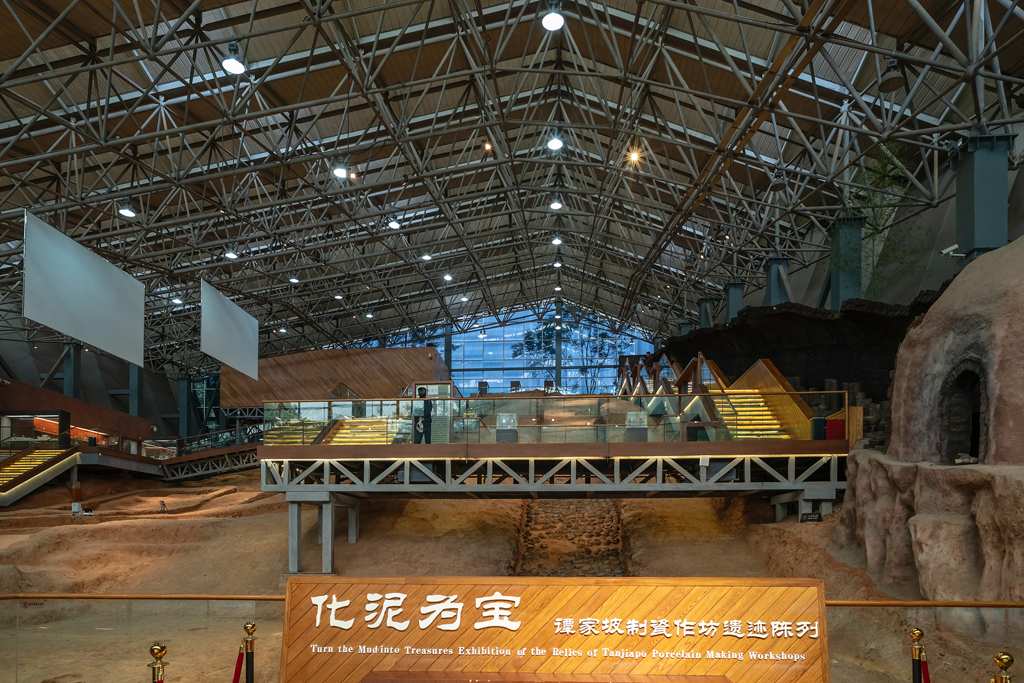
The archaeological site park of the Tongguan Kilns covers an area of 0.68 square kilometers, and is home to a group of remains, including 76 kilns, 19 clay mines, product warehouses, and tombs.
The core area of the site under protection - the southern slope of the Tanjiapo big kiln mound - is so far the world's best preserved Tang Dynasty dragon-shaped kiln (a major kiln design used in ancient China that is often long and narrow in shape and lies on a hill to make use of the sloping landform to transmit the heat). The kiln is 2.8 to 3 meters wide and stretches 41 meters up the hill. Clay mines, elutriation pits, furnaces, glaze vats, packaging stalls and other structures involved in the manufacturing workflow have been discovered. Over ten-thousand fragments of cultural relics that are eligible for conservation have been unearthed.
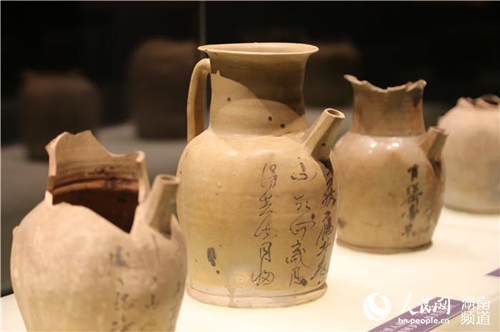
The Tang Dynasty witnessed a boom in the ceramics industry. Marked kilns were found widely distributed across the empire, with the Yue Kilns in southern China's Zhejiang province typifying celadon production, and the Xing Kilns in northern China's Hebei province leading in while-glazed stoneware production. Never confined by such an industrial layout, the Tongguan Kilns in Central China's Hunan province explored a unique way to carve out its own niche. It distinguished itself by creating and promoting a new type of ceramics, which were characterized with under-glazed paints. Once, during its heyday, Tongguan ware was so popular that it was exported to 29 countries and regions, including the whole of Asia and as far as Africa. Tongguan ware has undoubtedly written an indispensable chapter in Chinese ceramic history.
Other than key protected archaeological sites, the park also offers some hands-on activities for visitors to develop an in-depth understanding of the local ceramic history and manufacturing technologies.
Location: Caitaoyuan Village, Wangcheng District, Changsha City
