

Wang Fuzhi
2022-05-21
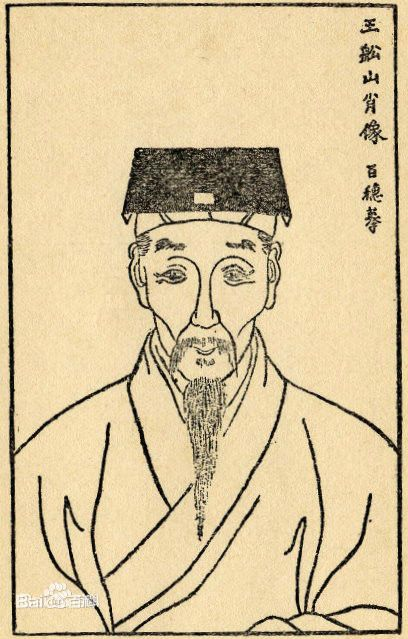
Educated by his father and brothers, Wang was an ardent patriot who bitterly resisted the invasion of China by the Manchu tribes of Manchuria and their subsequent establishment of the Qing Dynasty. He raised an army and joined the resistance led by the last remnants of the Ming Dynasty.
Realizing the cause was hopeless, he returned to his native village where he devoted his life to writing works on philosophy. He was in poor health and lived a destitute life in his later years. He wrote more than 400 volumes with over 8 million words. When he was at the age of 71, officials of Qing Dynasty wanted to visit him and present him with daily necessities. But he refused and wrote a couplet to express his stance.
Wang Fuzhi is an outstanding representative of Hunan culture, as well as the traditional Chinese culture. Being knowledgeable about philosophy, history, literature, politics, and natural science, Wang understood thoroughly about the traditional Chinese society and thoughts, thus making him a significant figure in the history of Chinese thoughts.
Wang Fuzhi’s former residence, Xiangxi Thatched Cottage, is located in Caitangwan, Xiangxi Village, Qulan Town, Hengyang County, Hengyang City. Built in 1675 during the Qing Dynasty, it has three thatched cottages, with the living room on the left and the study on the right, covering an area of 2,100 square meters and a building area of 180 square meters. Wang Fuzhi, whose courtesy name is Chuanshan, spent the rest of his life here for 17 years, leaving his work of more than 8 million words.
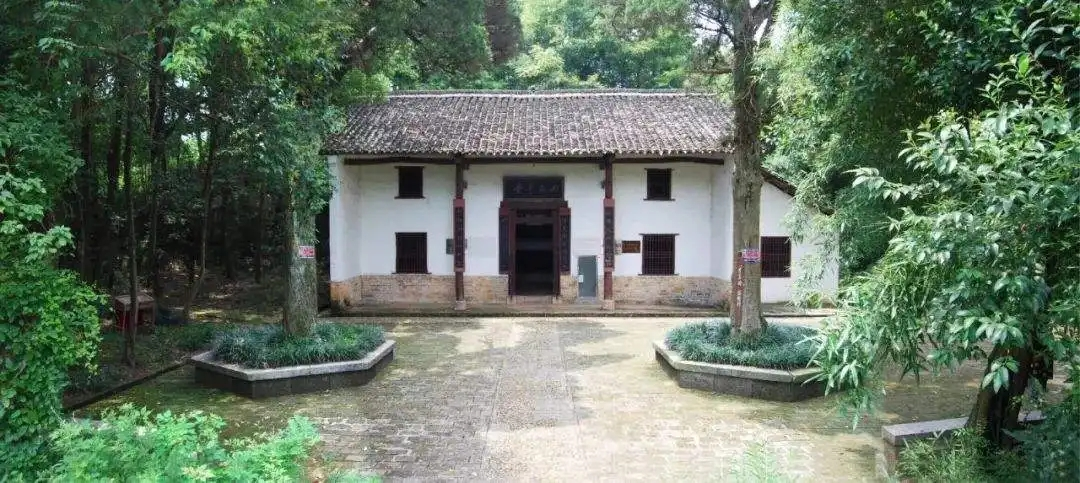
Here at this former residence, in the main hall hangs a plaque inscribed with “Xiangxi Thatched Cottage” in the front. On the front wall hangs the portrait of Wang Fuzhi. Below the portrait lie such gold plaques in praise of him as “Yue Heng Yang Zhi” (the four Chinese characters with their literal meaning of Wang’s substantial spirit and noble morality that are as grand as Mount Heng). On both sides of the hall hang some couplets inscribed by famous figures in the Qing Dynasty. On the left is the living room where the replicas of Wang’s bed, quilt, table and lyre are on display. On the right is the study where some of Wang’s works as well as Chinese paintings and couplets composed by renowned contemporary artists are also displayed.
In the courtyard luxuriant trees and bamboos are planted. A maple of ancient times, with its thick and curved trunks, is presented here. Due to its shape that is just like a horse running forward, it is named as “maple horse” by Mr. Wang. Besides, an ancient rattan, commonly known as “rattan dragon” because of its winding and circling shape, was planted by Wang himself. Both are highly praised as “wonders” by tourists at home and abroad for their peculiar shapes and great vitality.
