

New discoveries in Mawangdui Han Tombs
2022-11-04
Experts from Hunan Museum recently found that the auspicious words of “Happiness and Longevity” were woven into the damask with rhombic design of the Han Dynasty unearthed in Tomb 3 of Mawangdui, which is the earliest sentence found in the unearthed silk fabrics. This discovery has filled the gap in relevant research fields.
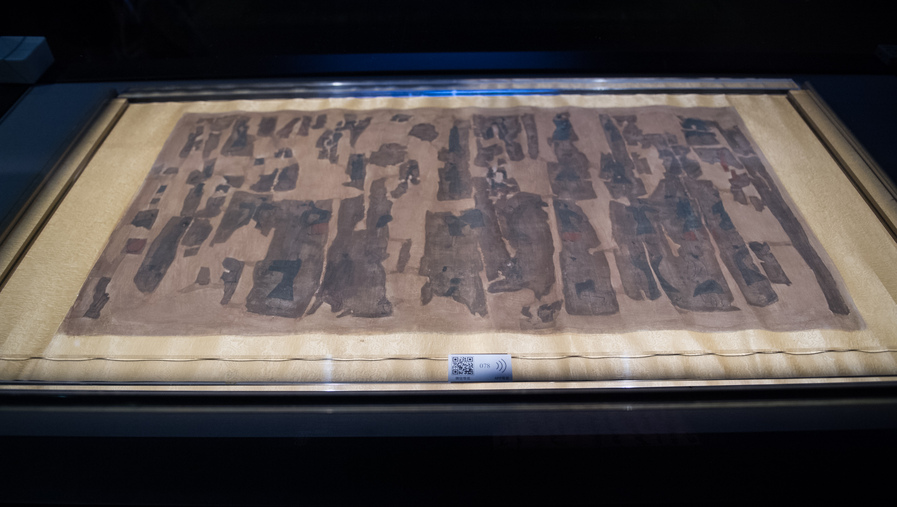
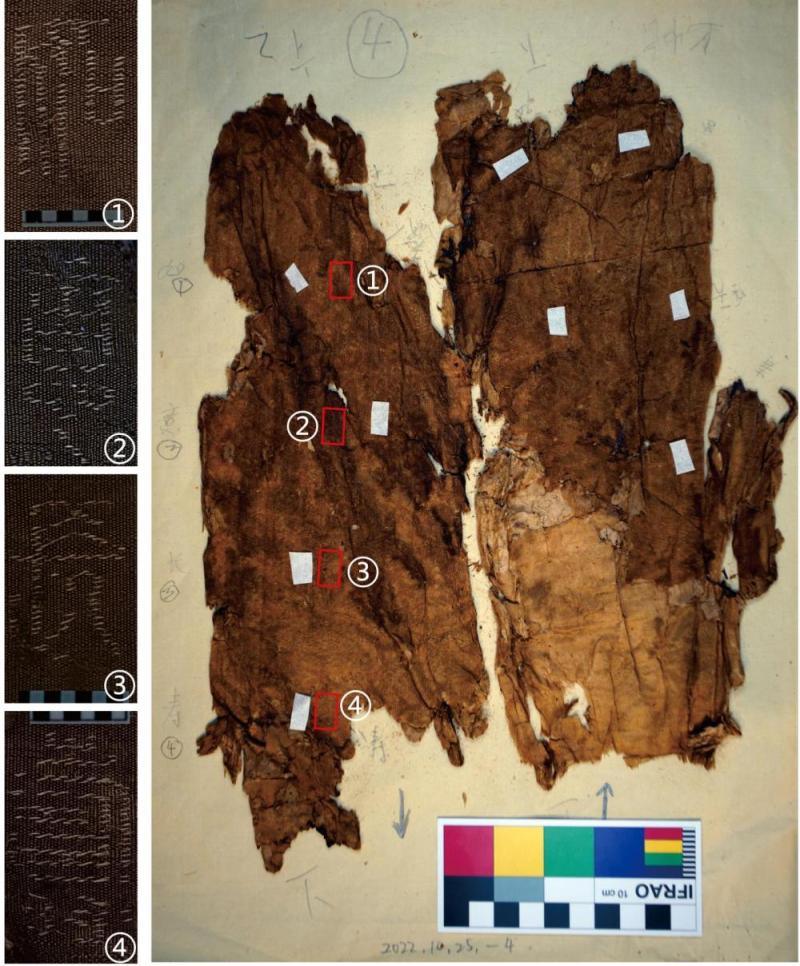
In April 2022, experts from Hunan Museum found there were Chinese characters woven into the damask with rhombic design of the Han Dynasty when they sorted out the textiles excavated from Mawangdui Han Tombs for the first time. After a series of research and comparison, experts discovered that these words were all from the silk floss robe with its surface made of brown damask with rhombic design in Tomb 3 of Mawangdui. At present, more than 80 characters have been found in over 70 fragments, all of which are vertical seal and clerical script characters of “Happiness and Longevity”.
Mawangdui Han Tombs excavated from 1972 to 1974 are the tombs of Li Cang (Marquis of Dai and Chancellor of Changsha Kingdom during the Western Han Dynasty of ancient China) and his family. The tombs housed over 3,000 precious cultural relics like exquisite lacquerware and mercery, which is one of the major archaeological discoveries in the world in the 20th century. The body of Marquise of Dai unearthed from Tomb 1 is the longest preserved wet corpse found in the world.
It is learned that Tomb 3 of Mawangdui is the tomb of Li Xi, the son of Marquise of Dai. Due to poor sealing and serious water seepage, many cultural relics were not well preserved. The brown damask silk floss robe was folded and placed in a bamboo box marked with “Shui Yi” which is a kind of clothes for the dead. The robe was broken into pieces and adhered to other textiles in the box when unearthed.
The Han people believed that death was the continuation of life. The auspicious words discovered in the robe not only confirm the Han people’s expectation of eternal life and the pursuit of longevity, but also reflect the superb textile technology of the Han Dynasty. Every word in the exquisite damask with rhombic design of the Han Dynasty found this time was woven into the rhombic pattern, suggesting that this weaving technique was very mature at that time.
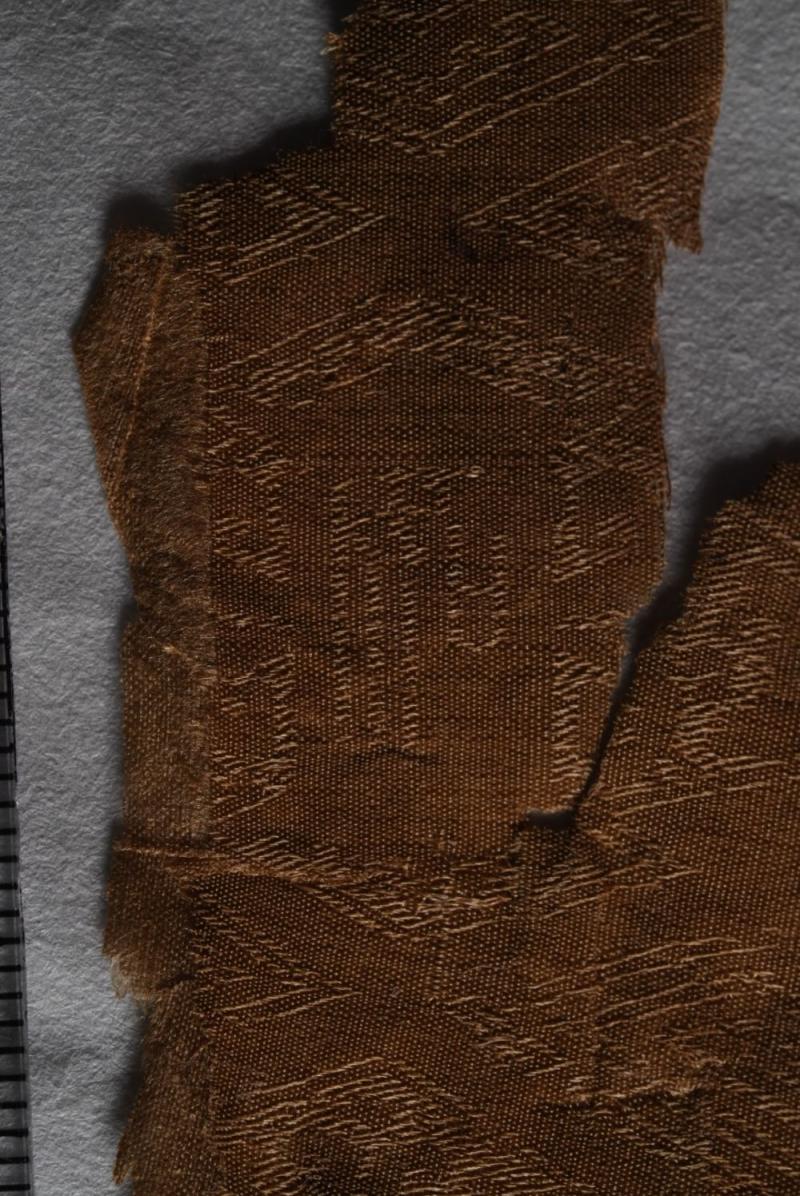
It is very difficult to preserve ancient silk fabrics. Currently, brocades of the Han and Jin Dynasties with the same characters have only been found at the site of Niya in Minfeng County of Xinjiang Uygur Autonomous Region, but their history is much shorter than that of the brocades discovered in Mawangdui Han Tombs. The characters in the brown damask silk floss robe are the earliest known words on the silk fabrics with more complex and exquisite weaving techniques. Moreover, the pattern of the damask is newly discovered.
