

Anhua Tea Factory, museum of Anhua tea culture
2023-01-06
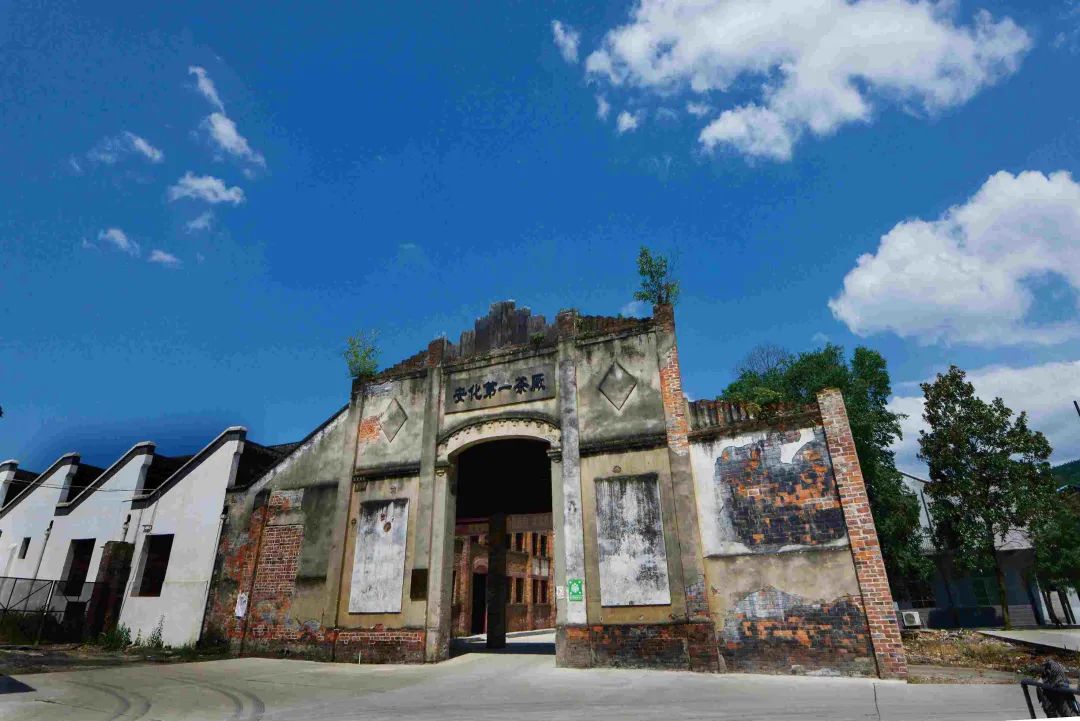
The early architectural complex of the factory covers an area of about 13,000 square meters, consisting of 14 cultural relics buildings like the tea wood warehouse, the Qing Dynasty tea workshop, the oolong tea processing yard and the auditorium.
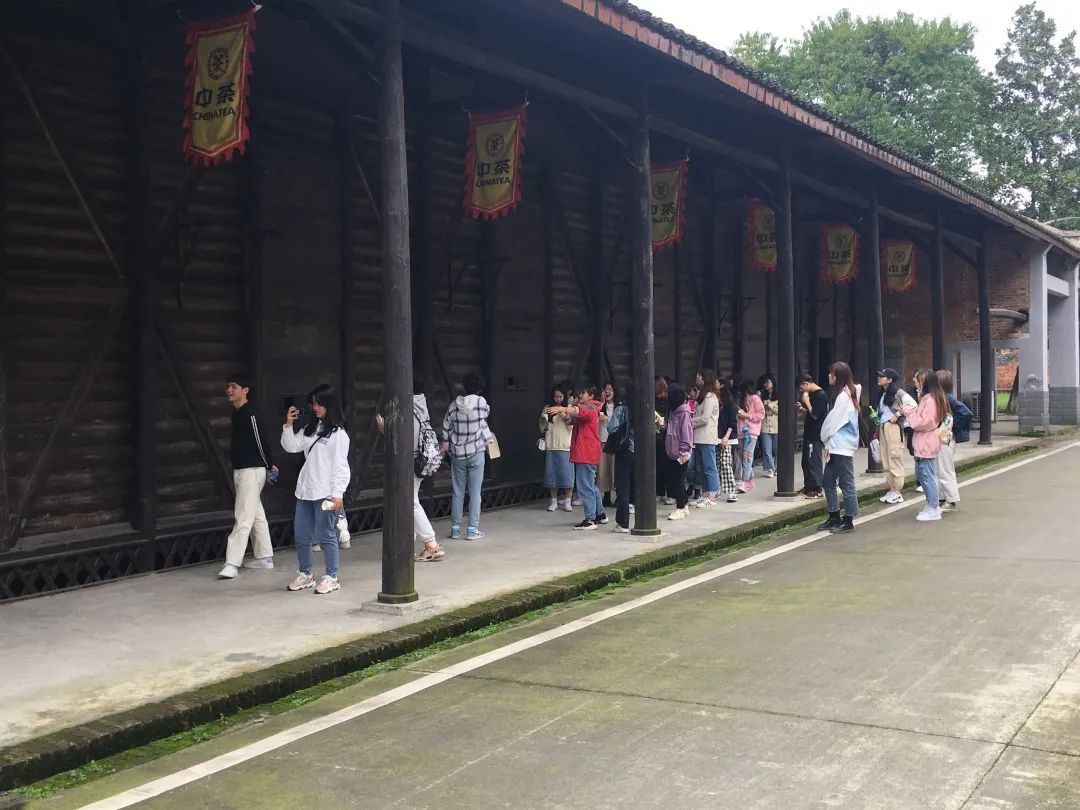
Among them, the Centennial Wood Warehouse is the most important cultural relic building, which is a national industrial heritage and cultural relic site under provincial-level protection. It’s also the largest and most complete pure wood tea warehouse in China today.
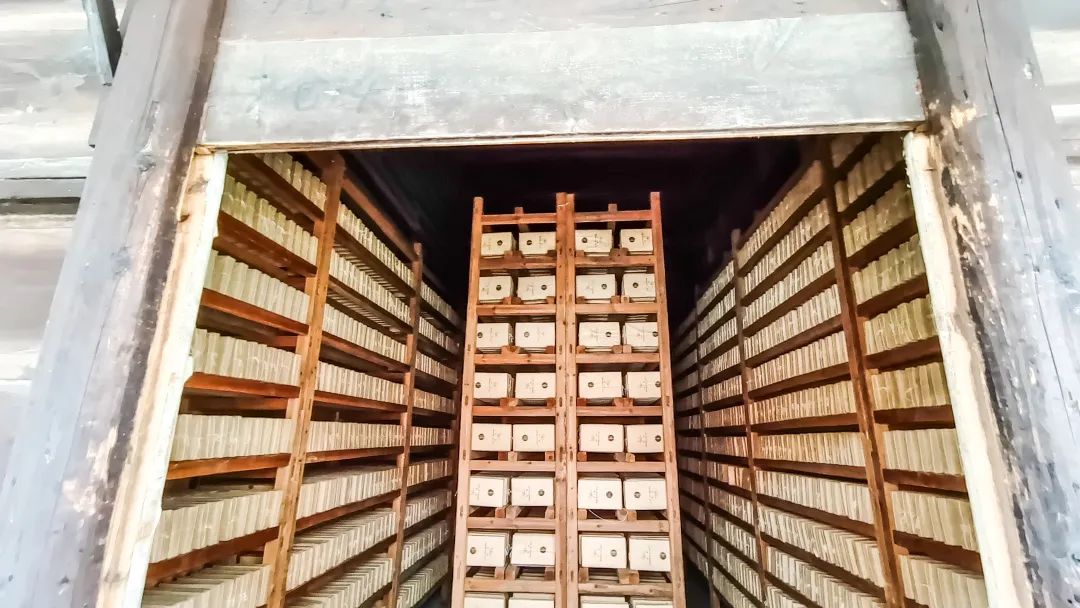
Among them, the Centennial Wood Warehouse is the most important cultural relic building, which is a national industrial heritage and cultural relic site under provincial-level protection. It’s also the largest and most complete pure wood tea warehouse in China today.
According to Luo Jianhua, general manager of Anhua Tea Factory of China Tea (Hunan) Co., Ltd., the early buildings of the factory are preserved thanks to several generations of tea workers’ efforts, and retain their historical, cultural and functional values.
In 1950, the factory was repaired and expanded on the basis of the wooden warehouse built by Shanxi merchants in 1902, and the original double-ridge structure was transformed into the current single-ridge structure with fire gables.
In July 2015, the cultural relics repair project was launched. Tens of millions of yuan was invested to protect and repair the Centennial Wood Warehouse, the single-door wooden warehouse, the zigzag workshop and the West Gate. And the project was completed in May 2016.
In 2019, the factory invested another 2 million yuan to protect, utilize and repair the tea workshops in the Qing Dynasty.
“The original styles and features of cultural relics were restored to the maximum extent, and the historical style and architectural features of cultural relics were preserved truly. Therefore, valuable historical information was effectively retained,” Luo Jianhua said.
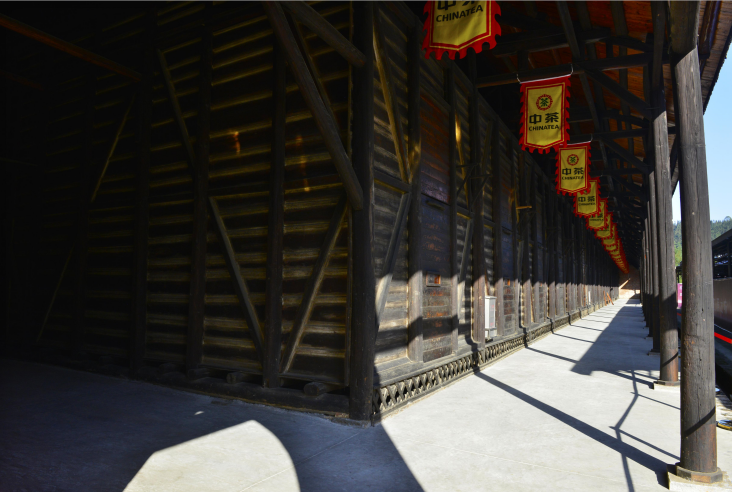
In 1950, the factory was repaired and expanded on the basis of the wooden warehouse built by Shanxi merchants in 1902, and the original double-ridge structure was transformed into the current single-ridge structure with fire gables.
In July 2015, the cultural relics repair project was launched. Tens of millions of yuan was invested to protect and repair the Centennial Wood Warehouse, the single-door wooden warehouse, the zigzag workshop and the West Gate. And the project was completed in May 2016.
In 2019, the factory invested another 2 million yuan to protect, utilize and repair the tea workshops in the Qing Dynasty.
“The original styles and features of cultural relics were restored to the maximum extent, and the historical style and architectural features of cultural relics were preserved truly. Therefore, valuable historical information was effectively retained,” Luo Jianhua said.
After a century of development, the Centennial Wood Warehouse still fulfills the function of tea collection. The renovated Centennial Wood Warehouse complex covers a total floor area of more than 3,000 square meters and 68 compartments, which can store over 1,000 tons of tea at the same time.
Due to the scientific nature of the building, the temperature and humidity in the warehouse are stable with good air permeability. The temperature, humidity and oxygen content reach the optimal ratio.
In addition, the warehouse has been used for hundreds of years, so it is rich in beneficial bacteria, forming the best microbial environment and micro ecological environment. It’s an unrepeatable tea ecological warehouse.
Tea aging and quality upgrading can be achieved through unique processes here, making tea soup brighter, mellower and more fragrant.
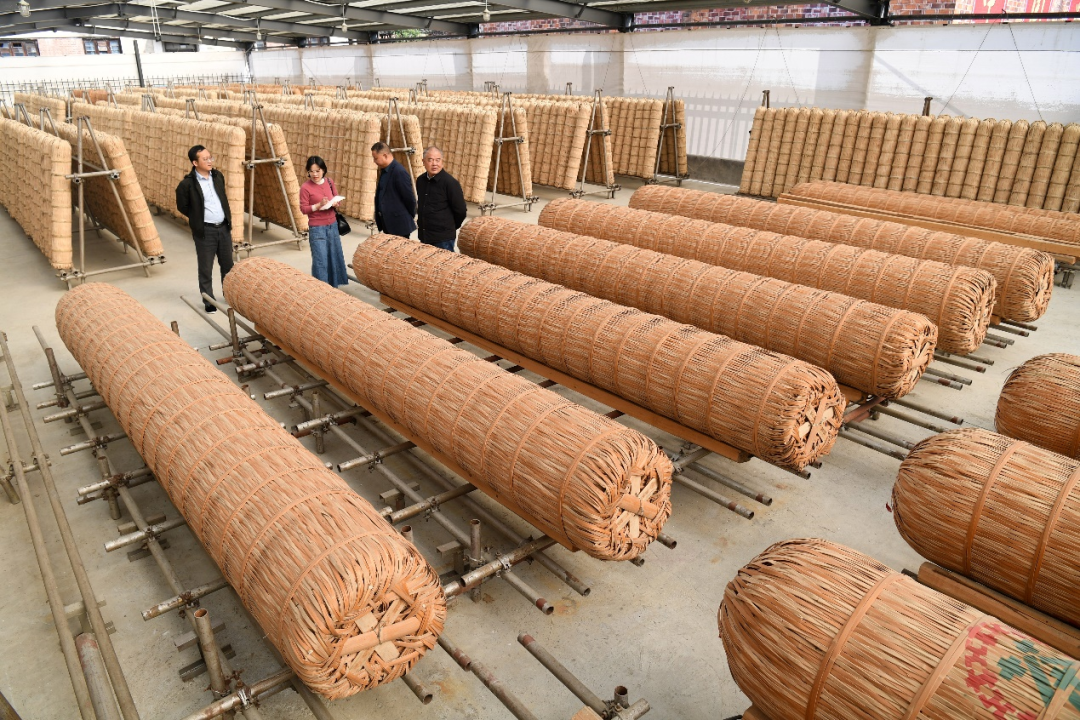
Due to the scientific nature of the building, the temperature and humidity in the warehouse are stable with good air permeability. The temperature, humidity and oxygen content reach the optimal ratio.
In addition, the warehouse has been used for hundreds of years, so it is rich in beneficial bacteria, forming the best microbial environment and micro ecological environment. It’s an unrepeatable tea ecological warehouse.
Tea aging and quality upgrading can be achieved through unique processes here, making tea soup brighter, mellower and more fragrant.
While inheriting the original functional values, the early architectural complex of the factory has been continuously endowed with the functional value of a new era. Industrial tourism has been developed through the integration of tea and tourism. Many scientific researchers, tea merchants, tea farmers, tea lovers and tourists come here to experience Fuzhuan Tea and Qianliang Tea processing and know more about the charm of Anhua dark tea. It receives nearly 10,000 tourists every year.
After protective development, the tea workshop in the Qing Dynasty, which was originally a sifting workshop, is now a tourist experience center. It’s equipped with places for handmade tea sifting, Huanjuan Tea processing, Fuzhuan Tea processing and literature exhibition, enabling tourists to experience such national intangible cultural heritage representative projects as Qianliang Tea, Fuzhuan Tea and traditional handmade tea sifting techniques.
The tea evaluation room has kept precious samples of all kinds of tea from all over the country since the 1940s, among which the earliest was the theine in 1943. At present, the tea evaluation room is still playing the role of product innovation and research, leading the new generation of tea farmers to continue to develop the tea industry.
After protective development, the tea workshop in the Qing Dynasty, which was originally a sifting workshop, is now a tourist experience center. It’s equipped with places for handmade tea sifting, Huanjuan Tea processing, Fuzhuan Tea processing and literature exhibition, enabling tourists to experience such national intangible cultural heritage representative projects as Qianliang Tea, Fuzhuan Tea and traditional handmade tea sifting techniques.
The tea evaluation room has kept precious samples of all kinds of tea from all over the country since the 1940s, among which the earliest was the theine in 1943. At present, the tea evaluation room is still playing the role of product innovation and research, leading the new generation of tea farmers to continue to develop the tea industry.
Furthermore, the West Gate, which has witnessed the development of Anhua tea industry over the past century, is now a landmark building of Red tea and tourism culture, attracting a number of tourists.
The three sorting yards, which were originally handmade sorting workshops, will also be developed into the Red Tea, Tourism, Culture Museum of Anhua Tea Factory of China Tea (Hunan) Co., Ltd.. And it will be a tea tourism culture exhibition center, tourist experience center and auditorium related to Red study tours.
The three sorting yards, which were originally handmade sorting workshops, will also be developed into the Red Tea, Tourism, Culture Museum of Anhua Tea Factory of China Tea (Hunan) Co., Ltd.. And it will be a tea tourism culture exhibition center, tourist experience center and auditorium related to Red study tours.
